A Lifetime of Women’s Health: Key Considerations at Every Age
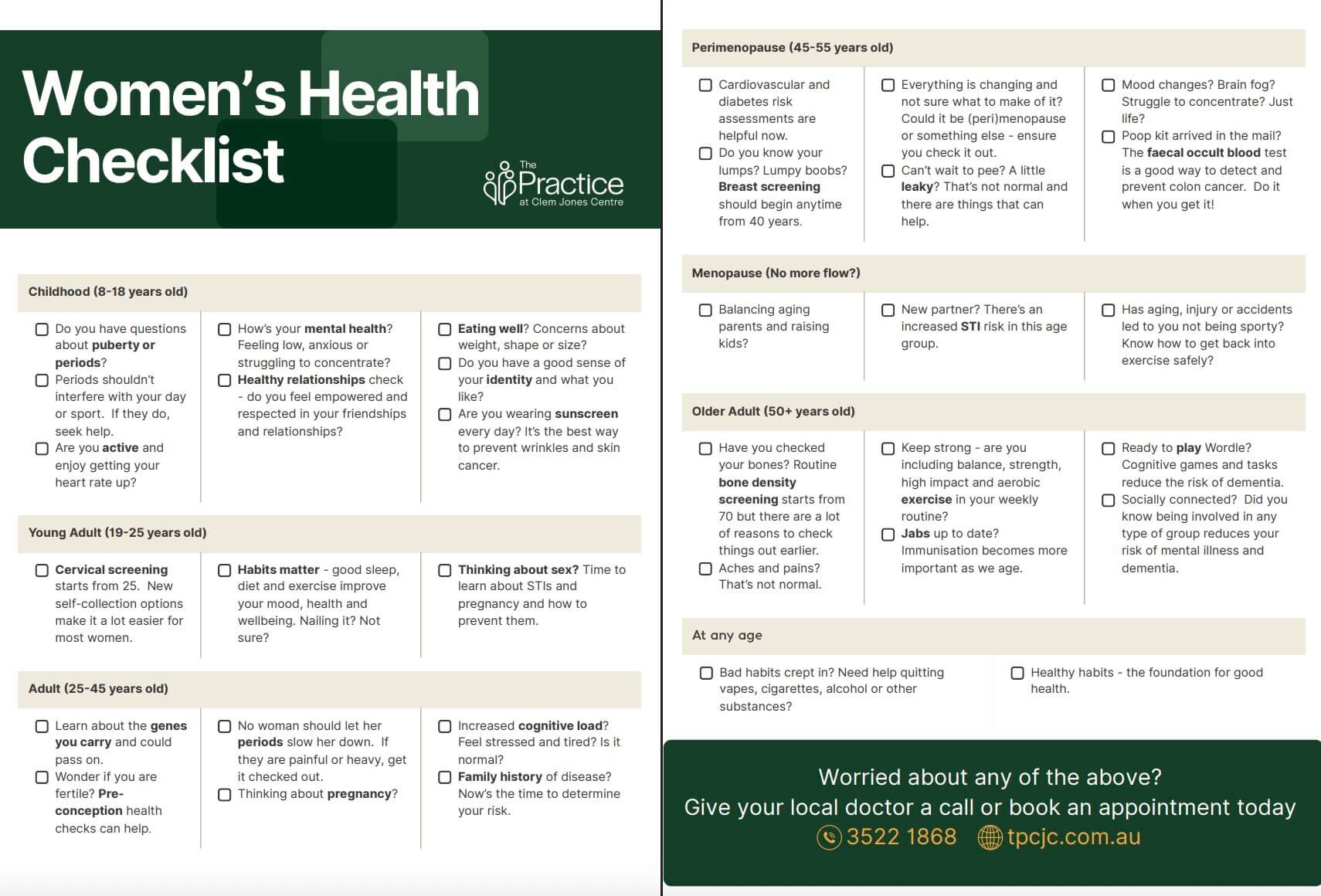
Women’s health evolves throughout life, with different priorities at each stage. From puberty to menopause and beyond, understanding these changes empowers women to make informed decisions about their well-being. Whether you’re navigating hormonal shifts, reproductive health, or maintaining strength as you age, here’s a guide to essential health considerations for women. Our doctors at The Practice at Clem Jones Centre have developed a quick checklist to help you understand your health over the years.
The checklist can be found here, but our blog provides more detailed information. Your GP strives to create lifelong relationships with you. Women’s health differs from men’s health, and our GPs understand this.
Childhood (8-18 Years Old): What you need to know as a parent or adolescent
The early years lay the foundation for lifelong well-being.
- Questions about puberty or periods? Understanding your body is empowering. Periods shouldn’t disrupt your daily life or sports—if they do, see your local GP.
- Staying active benefits physical and mental health—get your heart rate up regularly.
- Mental health check: Feeling low, anxious, or struggling to concentrate? Your GP can be that safe person to talk to.
- Healthy relationships matter—your friendships and connections should make you feel respected and empowered.
- Eating well is important, but concerns about weight, shape, or eating habits deserve attention.
- Exploring identity and interests helps shape self-confidence.
- Protecting your skin now helps prevent premature aging and skin cancer. Sunscreen every day!
Young Adulthood (19-25 Years Old)
Independence brings new health responsibilities.
- Cervical screening starts at 25—new self-collection options make it easier for most women.
- Good sleep, a balanced diet, and regular exercise are essential for mood, energy, and long-term health.
- Thinking about sex? Learn about STIs, pregnancy prevention, and reproductive health.
Adulthood (25-45 Years Old)
Balancing work, family, and personal health can be challenging, but prioritising well-being is key.
- Curious about your genetics? Understanding inherited conditions can guide decisions.
- Wondering about fertility? Pre-conception health checks offer valuable insights.
- Painful or heavy periods shouldn’t be ignored—effective treatments exist.
- Considering pregnancy? A pre-pregnancy health check can help you prepare.
- Feeling stressed or overwhelmed? Cognitive load and mental fatigue deserve attention.
- Family history matters—assessing health risks early can make a difference.
Perimenopause (45-55 Years Old)
Hormonal shifts impact various aspects of health.
- Cardiovascular and diabetes risk assessments become particularly important.
- Breast screening can start at 40—know your body and what’s normal for you.
- Experiencing physical or emotional changes? It may be perimenopause—check in with your doctor.
- Urinary leakage isn’t something you have to live with—solutions exist to improve bladder health.
- Brain fog and difficulty concentrating can be part of perimenopause but shouldn’t be dismissed.
- A faecal occult blood test can detect colon cancer early—use it when it arrives in the mail.
Menopause (No More Flow?)
The end of menstruation marks a new stage of health.
- Balancing aging parents and raising children? Self-care is essential.
- In a new relationship? STI risk increases in this age group.
- Has injury or aging made exercise harder? Learn how to safely return to exercise.
Older Adulthood (50+ Years Old)
Long-term health requires attention to strength, mobility, and prevention.
- Bone health is crucial—routine screenings for osteoporosis begin at 70 but may be needed earlier.
- Aches and pains? Address them rather than accept discomfort as inevitable.
- Maintaining strength with balance, weight-bearing exercises, and aerobic activity keeps you active.
- Immunisations become more critical with age—stay up to date.
- Mental sharpness matters—brain exercises and social engagement reduce dementia risk.
- Stay socially connected! Community involvement improves mental health and longevity.
Healthy Tips for Women at Any Age
Women’s health requires ongoing attention, no matter your stage in life:
- Struggling with habits? Support is available for quitting smoking, vaping, alcohol, or other substances.
- Healthy lifestyle choices—diet, exercise, sleep—form the foundation of long-term well-being.
Worried about your women’s health?
Our Carina doctors have this handy checklist ready for you to use:
Simply print if off or save it to your device. Share it with a female friend or family member. Taking control of your health is important. Don’t let life get too busy that you forget about yourself.
If you have ticked any boxes on this form, call or book an appointment today.